Austin Crime Statistics 2026 – How Safe Is the City Really?
Austin Crime Statistics 2026 – How Safe Is the City Really?
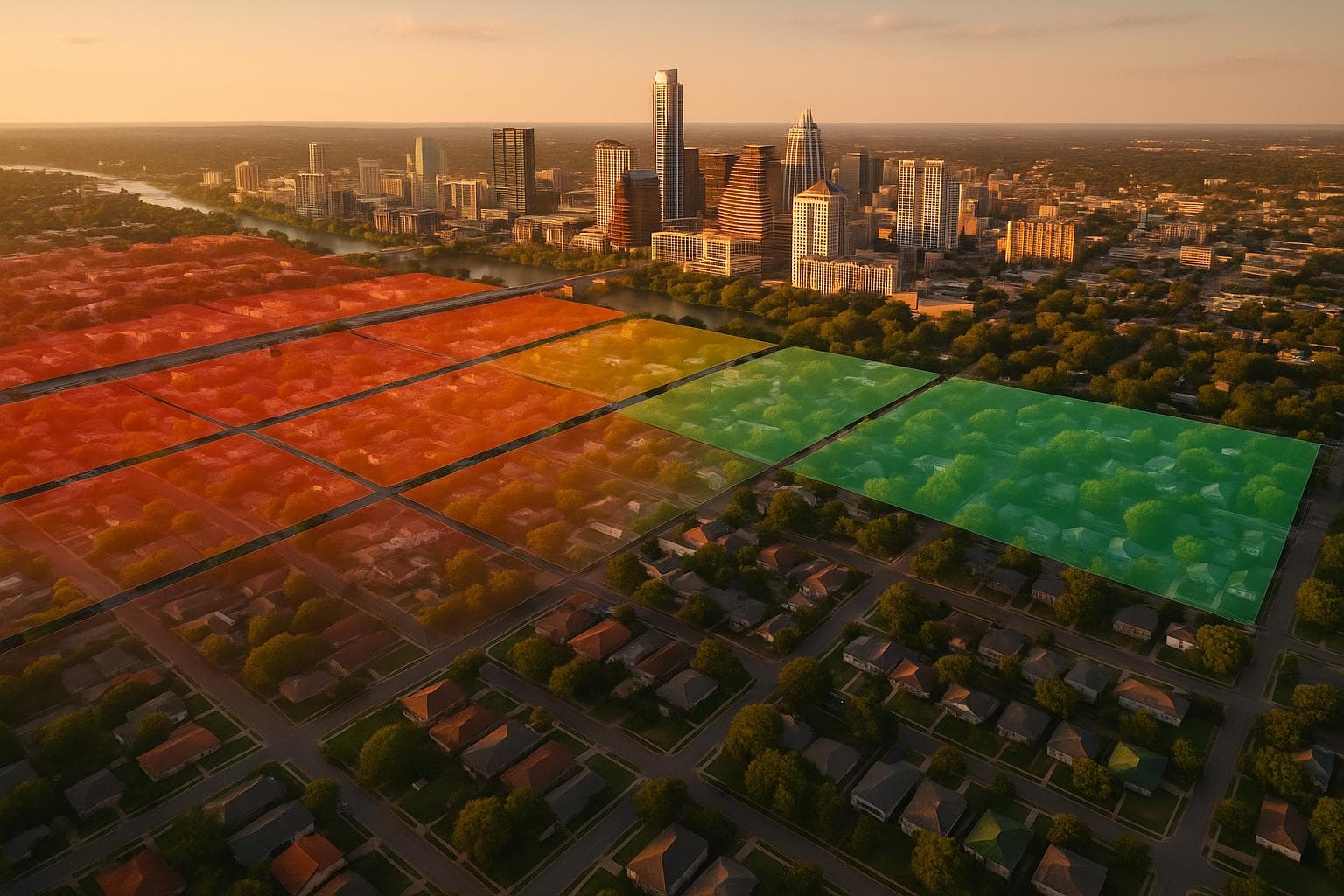
Austin in 2026 is safer than many major cities, but property crime remains a challenge. Violent crime rates are below the national average, with homicides significantly dropping to 50 by mid-November, compared to 72 in 2024. However, property crime, such as theft and vehicle break-ins, slightly exceeds the U.S. average and is concentrated in specific areas like Montopolis and East Riverside-Oltorf.
Safer neighborhoods, like Mueller, report lower crime rates and attract higher rents. Tools like AdensZip provide detailed, localized safety insights, helping residents and visitors make informed decisions. Austin's efforts to reduce crime, including targeted policing and community engagement, have shown progress, but property crime remains an area to address.
Austin begins 2026 with lower homicide rate than previous years
Austin's 2025 Crime Statistics
The crime data for Austin in 2025 presents a mixed picture: a notable decline in violent crime but persistent challenges with property-related offenses. According to the Austin Police Department, the city's violent crime rate stood at approximately 370 incidents per 100,000 residents in 2025. While this figure is slightly higher than the national average of 359 per 100,000 people recorded in 2024, there are positive signs, particularly in homicide statistics. By November 15, 2025, Austin reported 50 homicides - a significant drop from 72 in 2024, 75 in 2023, and 71 in 2022. Below, we delve into the trends shaping violent and property crime in 2025.
Violent Crime Rates
Violent crimes in Austin include offenses such as homicide, aggravated assault, robbery, and rape. At around 370 incidents per 100,000 residents, the city's violent crime rate remains above the national average. However, early indications from 2024 revealed a nearly 20% decrease in violent crime compared to 2023, a positive trend that has carried into 2025. On average, violent crimes occur at a rate of about 5 per 1,000 residents.
In total, Austin residents face a combined violent and property crime rate of approximately 39 incidents per 1,000 people, meaning about 1 in 26 residents experiences some form of crime annually. While the downward trend in violent crime is encouraging, property crime remains a more persistent issue.
Property Crime Rates
Property crimes - such as burglary, theft, and motor vehicle theft - occur far more frequently than violent crimes in Austin. These incidents often spike during major events like SXSW or in high-traffic areas, such as near the University of Texas campus, where increased activity creates more opportunities for theft. Although property crime rates have remained elevated, the 2025 data suggests some stabilization compared to the sharp increases seen in previous years.
Understanding these patterns is critical for residents, workers, and visitors alike, helping them make informed decisions about safety in different areas of the city. While Austin has made strides in reducing violent crime, addressing property crime remains a key challenge moving forward.
Crime Rates by Austin Neighborhood
Taking a closer look at Austin's neighborhoods reveals noticeable differences in crime rates across the city. Crime isn’t evenly distributed, with some areas experiencing higher levels of both violent and property crimes, while others remain much safer. These variations are critical for residents, workers, and visitors when deciding where to live, work, or spend time. This neighborhood-level analysis adds depth to the broader citywide crime trends.
Neighborhoods with Higher Crime Rates
Certain neighborhoods in Austin, such as Montopolis, St. Johns, Rundberg, East Riverside-Oltorf, Dove Springs, Franklin Park, Heritage Hills, North Lamar, Johnston Terrace, and East Cesar Chavez, experience higher crime rates, including property crimes like burglary, car theft, and vehicle break-ins, as well as violent and drug-related offenses.
However, these statistics can sometimes be influenced by factors unrelated to residential safety. For instance, shoplifting incidents in retail hubs are often included in neighborhood crime data, even though they don't directly reflect the safety of residential areas. Additionally, elements like neighborhood layout and population density can play a role in shaping crime patterns.
Crime Rate Comparison Across Neighborhoods
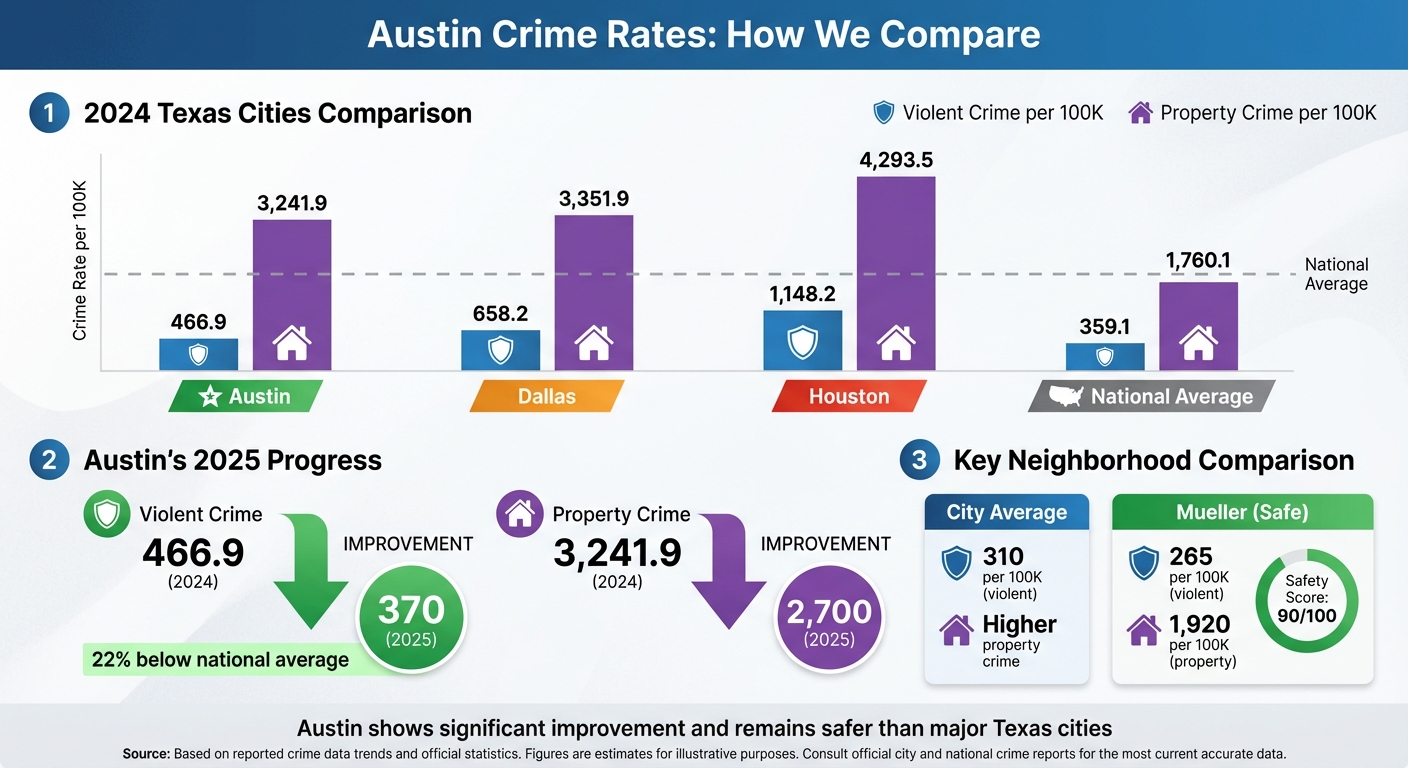
The difference between Austin's high-crime areas and its safer neighborhoods is stark. While the city’s overall violent crime rate stands at 310 per 100,000 residents, neighborhoods like Mueller report a significantly lower rate of 265 per 100,000. Mueller’s design - featuring wide sidewalks, small parks, well-placed retail spaces, and modern lighting - contributes to its lower violent crime rate of 265 per 100,000 and a property crime rate of 1,920 per 100,000, which is well below many other parts of the city. The neighborhood also boasts a composite safety score of 90 out of 100.
Neighborhoods with lower crime rates tend to attract higher rents, with safer areas commanding about a 12% premium. This reflects their appeal, driven by factors like better schools, stronger community resources, and overall safety. While official statistics provide a helpful starting point, exploring these neighborhoods in person often offers a more complete perspective.
How Austin Compares to Other Texas Cities
Austin Crime Rates 2024-2025 Compared to Texas Cities and National Average
When it comes to crime rates, Austin stacks up well against other major cities in Texas. In 2024, Austin's numbers highlighted its relative safety. For violent crimes, Austin reported a rate of 466.9 per 100,000 residents, which was notably lower than Dallas's 658.2 and Houston's 1,148.2 per 100,000 residents. Property crime followed a similar trend, with Austin recording 3,241.9 per 100,000 residents, compared to Dallas's 3,351.9 and Houston's 4,293.5 per 100,000 residents.
| City | Violent Crime Rate (per 100,000) | Property Crime Rate (per 100,000) |
|---|---|---|
| Austin (2024) | 466.9 | 3,241.9 |
| Dallas (2024) | 658.2 | 3,351.9 |
| Houston (2024) | 1,148.2 | 4,293.5 |
| National Average | 359.1 | 1,760.1 |
Fast forward to 2025, and Austin's crime rates showed further progress. The violent crime rate dropped to 370 per 100,000 residents, dipping below the national average. Meanwhile, property crime stood at 2,700 per 100,000 residents, which, while slightly above the national average, still reflected an improvement.
It's important to note that larger cities like Houston and Dallas naturally report higher crime rates due to their size and population density. This context underscores the significance of Austin's relatively lower figures, especially as urban areas continue to evolve. For residents, visitors, and those considering a move to Austin, these statistics offer a clearer picture of the city's safety landscape.
sbb-itb-6d427fc
Austin's Crime Reduction Efforts
In 2025, the Austin Police Department (APD) rolled out a series of targeted strategies aimed at enhancing public safety. These efforts centered on boosting officer recruitment and leveraging data analytics to allocate resources more effectively across the city. The results? Noticeable progress in reducing crime.
2025 Policing Programs
The APD's 2025 initiatives revolved around three key areas: increasing recruitment, adopting evidence-based patrol strategies, and introducing new leadership-driven directives. A standout feature of these efforts was the use of crime analytics to identify high-risk areas and times. This data-driven approach allowed officers to shift from reactive responses to proactive crime prevention by strategically positioning themselves where they were needed most.
Another critical component was the emphasis on community engagement. The department worked to strengthen trust between officers and residents through neighborhood partnerships, particularly in areas with historically higher crime rates. These programs aimed to foster collaboration and build stronger relationships between law enforcement and the community.
Together, these strategies laid the groundwork for the specific measures implemented in 2025, contributing to a notable drop in crime statistics.
Crime Trends from 2022 to 2025
The impact of these initiatives is reflected in Austin's crime data, which shows a clear downward trend over recent years.
Homicide rates, a key indicator of public safety, saw a marked decline. By early March 2025, Austin reported 6 homicides, a significant improvement compared to 11 in 2024, 16 in 2023, and 13 in 2022 during the same period. By November 15, 2025, the total number of homicides had dropped to 50.
The positive trend extended beyond homicides. Both crimes against persons and property reached a five-year low in early 2024, with the downward trajectory continuing into 2025. Year-over-year, violent crime rates decreased citywide, with already safe areas maintaining or improving their safety levels. These collective efforts underscore Austin's progress in creating a safer community, as highlighted throughout this analysis.
Using AdensZip for Crime Data Analysis

AdensZip provides instant, AI-driven safety insights, helping you make smarter choices about living, working, or visiting Austin. Here's how AdensZip turns raw data into actionable safety information.
AdensZip's Crime Intelligence Tools
AdensZip goes beyond citywide crime trends by offering detailed, hyper-local reports. These reports combine crime statistics with other essential factors like cost of living, climate, and nearby amenities. You can drill down to specific ZIP codes, giving you a clear and focused view of neighborhood safety.
Premium Plan Benefits
For those seeking more in-depth analysis, AdensZip offers a Premium Plan for $9.99 per month. Subscribers unlock advanced reports that pair crime data with insights on job markets, real estate trends, and lifestyle factors. The plan also includes AI-driven recommendations and real-time updates through its News Pulse feature, ensuring your relocation or travel decisions are always up to date.
Conclusion
Austin's 2025 crime data offers some encouraging news for both residents and visitors. The city has seen a meaningful decline in homicides, and its violent crime rate is now 22% lower than the national average. This progress places Austin among the safer major cities in Texas.
However, property crime remains a concern, slightly exceeding the U.S. average. That said, these incidents are largely concentrated in specific urban areas, while many residential neighborhoods enjoy much lower crime rates compared to the city as a whole.
Understanding these patterns is key, and that's where AI-driven tools like AdensZip come in. AdensZip simplifies Austin's crime statistics into clear, location-specific insights. With just a few clicks, you can access tailored safety assessments for your neighborhood - no need to wade through endless reports.
Whether you're planning a visit, considering a move, or looking to invest, having the right information is critical. With its improving safety trends and the right neighborhood choice, Austin continues to be an appealing option.
FAQs
Which areas in Austin have the highest property crime rates in 2025?
In 2025, Austin's central and northeastern neighborhoods report the highest property crime rates in the city. These areas have consistently experienced more incidents compared to other parts of Austin.
For those planning to move to or visit the city, it’s wise to look into the safety records of specific neighborhoods and stay updated on local crime prevention efforts. Being aware of these patterns can guide you in choosing where to live, work, or spend time while navigating Austin.
How does Austin's violent crime rate compare to other major cities in Texas?
In 2025, Austin's violent crime rate stands at roughly 370 incidents per 100,000 residents. This figure is noticeably lower than cities like Dallas, which reports about 543 incidents, and Houston, with approximately 635 incidents. However, it is higher when compared to smaller, safer suburbs such as Flower Mound and Keller. While Austin continues to be safer than many large metropolitan areas, these statistics provide valuable context for anyone considering living in or visiting the city.
What steps has Austin taken to improve public safety in 2025?
In 2025, Austin rolled out a series of measures aimed at improving public safety and cutting down on crime. These efforts included launching a new hiring program to bring more police officers on board, implementing data-driven strategies to make patrols more effective, and increasing police visibility in areas with higher needs.
The city also prioritized infrastructure upgrades, such as adding better street lighting and enhancing pedestrian safety. These improvements were part of the Vision Zero program, designed to make Austin safer for both residents and visitors.